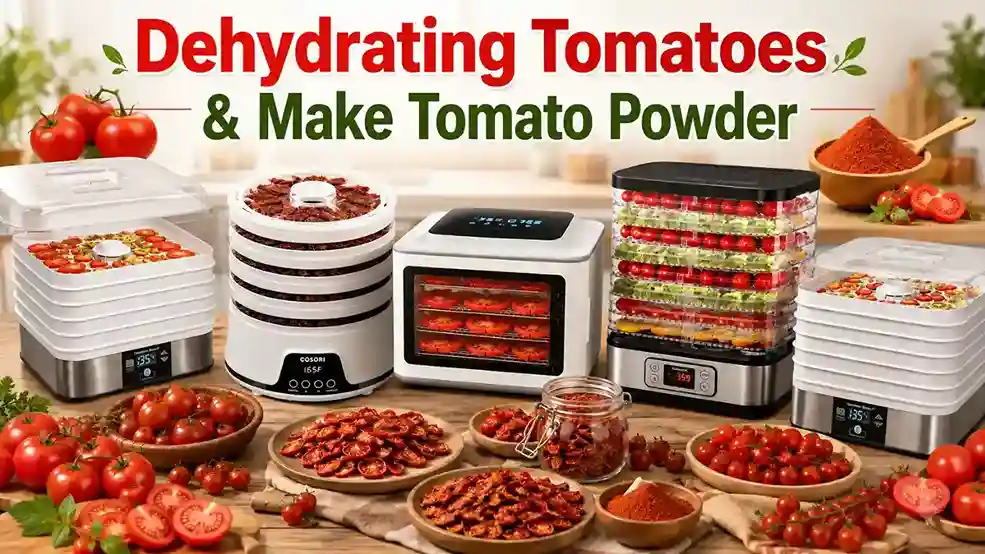
How To Dehydrate Tomatoes & Make Tomato Powder – Preserving fresh tomatoes is the simplest way to stock your pantry with a versatile ingredient. Drying tomatoes is a great option for preserving them if you have an abundance from harvest, some that are extra from the market or just simply to promote less food waste.
The tomatoes can then be eaten as snacks, added to a recipe or ground into a fine powder if dried completely. This powder can be used to prepare salsa, paste, soups, stew and there also you can make dipswith this with seasonings like tangy spice,saucefor pizza preparation.
The approach does not involve any of this heavyweight gear. To get started all you need is a dehydrator, fresh tomatoes, a sharp knife and an airtight container.
How to Use You tomato powder and Put it Together There are 5 Food Dehydrators To Make Tomato Powder.
The selection of dehydrator makes all the difference especially if you constantly store fruits or vegetables it can help ease Dehydrating Tomatoes & Make Tomato Powder.
1. Hamilton Beach Digital Food Dehydrator
Hamilton Beach Digital Food Dehydrator is BPA free and has 5 stackable trays, an impressive 4.2 square ft. of drying space along with adjustable temperature control from 100°F–160°F and a digital timer 1–48hrs with auto shutoff. This 500-watt heater and fan deliver consistent airflow, plus a mesh screen and fruit leather tray for extra versatility.
Pros
- 5 stackable trays
- 100°F–160°F temperature range
- 1–48 hour digital timer
- Auto shutoff
- Consistent airflow
- Contains trays for mesh & fruit lather.

Cons
- 160F max temp not appropriate for any drying job
- Limited to 5 trays
2. Cosori Food Dehydrator
The Cosori Food Dehydrator comes with five BPA-free trays, temperatures adjustable from 95°F to 165°F and a timer of up to 48 hours. Its expandable tray system offers additional capacity, and adjustable tray heights allow for varying thicknesses of food. Because the noise level is over 47 dB, it operating very quietly and can be used to dry tomatoes for a long time.
Pros
- 95°F–165°F temperature range
- 48-hour timer
- Expandable up to 7 trays
- Adjustable tray height
- Quiet operation

Cons
- Awards> Cups/prizes need to be purchased based on the batch size (larger batches may require multiple trays)
- Extra trays are sold separately
3. FOHERE Food Dehydrator
Including five stackable BPA-free trays, a 400-watt system and operating temperature range from 95°F to 158°F this FOHERE Food Dehydrator has, like most of the tools on this list, a clear cover for checking on food.Along with its adjustable tray heights making it ideal for drying tomatoes and other foods the FOHERE also comes with a dishwasher safe lid and trays which makes cleaning up afterward much easier.
Pros
- 5 BPA-free trays
- 95°F–158°F temperature range
- 48-hour timer
- Adjustable tray heights
- Dishwasher-safe trays and lid
- 400-watt performance

Cons
- Five trays could be a limitation for the larger batches
- Maximum temperature is 158°F
4. Stainless Steel Tray Compact Food Dehydrator
The compact design comes with four stainless-steel trays and a broad 70°F–190°F temperature setting range. The digital display makes settings simple to change, and its stainless steel construction allows for drying both tomatoes and other fruits, vegetables (we like with 6 trays.), herbs and snacks. The smaller form factor is also a plus for households that aren’t as large, too.
Pros
- 4 stainless steel trays
- 70°F–190°F temperature range
- Easy-to-use digital display
- Durable construction
- Compact and easy to store

Cons
- What we need: a scalable dryer capable of drying at a small scale.
- Only 4 trays
5. Homdox Food Dehydrator
The Homdox Food Dehydrator has eight BPA-safe trays with 7 square feet of dehydration space, so it’s great for bigger batches of tomatoes. It has a 400-watt motor that circulates hot air in all directions, plus digital controls and the ability to heat anywhere from 95°F–158°F for between one and 72 hours. They are equipped with adjustable trays and have herb and fruit leather accessories.
Pros
- 8 BPA-free trays
- About 7 sq. ft. drying space
- 95°F–158°F temperature range
- 1–72 hour timer
- 360-degree air circulation
- Adjustable tray heights

Cons
- Potential uses of max temp 158°F
- Larger footprint than compact models
The Best Varietals For Dehydrating Tomatoes
You can do just about any ripe tomato, but meaty types such as Roma, cherry and grape tomatoes are good candidates for dehydration. For larger tomatoes, cut them into 1/4-inch thick slices and for smaller ones, slice in half. Pick firm tomatoes without blemish and keep pieces uniform to dry at a consistent rate.
How to Dehydrate Tomatoes
Pre wash the tomatoes under clean running water before Dehydrating them. Cut off the stem and any rotten bits
Generally, however, you do Not need To peel tomatoes. Leave the skin on to speed up prep and help the slices hold their shape.
Wash and Slice the Tomatoes
Get rid of watery excesses by washing firm and ripe tomatoes. Core and slice large tomatoes into 1/4-inch-wide slices (or cut cherry or grape tomatoes in half). Cutting them all more or less the same size ensures they dry evenly.
Arrange on Dehydrator Trays
Arrange the tomato slices in a single nonoverlapping layer. Place the pieces with some spaces between them to help ventilation. Cut particularly cherry tomatoes (cut side up).
Set the Temperature
Set the dehydrator to 145°F or whichever setting your machine recommends. Tomatoes take some where in the range of 6–12 hours, reliant on their thickness and dampness content. Flip them every so often and turn the pieces if they start to stick.
Check for Doneness
Tomatoes did when they feel absolutely dry and hard. When making tomato Powder, dry them until they are crispy and brittle and do not have soft or moist parts. Continue dehydrating until they are completely dry if you can be flexible.
How to Store Dehydrated Tomatoes
Then removed the dried tomatoes out to cool down completely before placing them for storage. Put them in a clean, sealed container.
Tight glass jars work great too. Keep the container in a place where it is cool, dark and dry or away from sources of heat and sunlight.
In the case of storage for longer periods, it is important to protect dried food from moisture or air. You may choose to use a vacuum-sealed container for extra protection, but this is not necessary.
Check stored tomatoes occasionally. If there is condensation, if they are soft, unpleasant smells or signs of spoilage appear — do not use them.
This is the method for preparing DIY Tomato Powder
There are many things you can do with completely dried tomatoes, and one of the most useful is to turn it into homemade tomato powder.
It is easy: dry the tomatoes until powdered, cool and crush in fine powder.
Ensure the tomatoes are completely dried
Check the dried pieces good before grinding. It should have the minimal moisture possible
If they are not hard at this point, return them to the Dehydrator for extra Drying.
Grind the Tomatoes
Transfer the dried tomato pieces to an empty clean blender, food processor or a small and suitable spice mill.
Blitz them until they turn to powder. The machine might need to be turned off (pause) and scrape down the sides.
If they do not turn into powder, perhaps it is because they are not dry enough? This can be solved by dehydrating them more.
Store the Powder
Once complete, transfer the tomato powder to a dry jar with an airtight lid. Store it in a dark, dry place at a reasonably cool temperature.
Every time you scoop powder from the pot, use a dry spoon Additives that induce moisture can retard clumping but lower the storage life of the product.
What Are the Components of Tomato Powder?
Homemade tomato powder has a potentially very short ingredient list: tomatoes.
When you prepare it yourself from simple dehydrated tomatoes, bye-bye salt, sugar and further preservatives and artificial flavoring.
Many commercially made tomato powders have added ingredients, so always check the label for anything you buy.
Powdering at home means more control over what you end up consuming.
How to Use Tomato Powder
Many people do not know how versatile tomato powder is. It offers a concentrated tomato flavor without needing fresh tomatoes or a can that’s been opened.
Tomato Paste
Add tomato powder and mix it with some water for an instant tomato paste. You can vary the water quantity according to your desired consistency.
Tomato Sauce
Combine the powder with water, garlic, basil, oregano, black pepper and some other seasoning you like.
Soups and Stews
Use tomato powder straight into any soups & stews that you are cooking It will add tomato flavor as well as act to increase thickness.
Pizza Sauce
You can mix tomato powder with water and seasonings to make a quick and easy pizza sauce.
Seasoning
Add a pinch to roasted vegetables, rice, pasta dishes, eggs or your homemade snack mix for an extra boost of tomato goodness.
Shelf Life of Tomato Powder
The shelf life of homemade tomato powder can range for several years if it is properly stored with completely dried tomatoes. Store it in an airtight container protected from moisture, heat, and light. Make sure to inspect for smell, moisture, mold, or appearance before you use your items!
1 Kg Tomato Powder Price?
How much will 1 kg of powder tomato cost? The type of fresh tomatoes, the of tomatoes used in processing (peeling, end product integration), branding combined with geography can all matter at a wide range. For best price comparison, visit current local or online retailers.
How To Dehydrate Tomatoes Best Method
A food dehydrator is a much more convenient Preservation option as they are designed to provide the heat and airflow in a controlled environment. You can use firm, ripe tomatoes, cut them into even slices and lay it in single layer, drying until crispy. For powder, the pieces have to be very brittle and so they will grind very easily.
How to Dehydrate Tomatoes for Powder
Wash and slice the tomatoes to begin with smaller portions, then place them evenly on dehydrator traps without overlapping one another. Dehydrating them at about 145°F until they are all the way dry and brittle. Let the pieces cool down first, then blend or grind them to create a powdery form. Keep Drying if they are difficult to grind before processing once more Keep the dry powder in a sealed container out of moisture.
Conclusion
Preserving Tomatoes – Dehydrated Tomatoes & Tomato Powder The convenient way to turn tomatoes into a kitchen staple. Drying Tomato in pieces or powdered, works with a good Preparation (even sliced, enough air flow and full Dry).
You can get the process easier, if you use a right home dehydrator – whether for preserving a garden harvest or experimenting with homemade ingredients. Hamilton Beach, Cosori, FOHERE, compact stainless steel and Homdox All of these models come with various combinations of capacity, temperature control, timers and tray configurations.
After thorough dehydration of our Tomatoes, the resulting Powder has potential to be delicious flavorful pantry item for sauces, soups and stews, pizza dough seasoning and many other recipes.
Frequently Ask Questions
How long does tomato powder last?
When prepared and stored correctly, tomato powder has a long shelf life. Store him in an airtight container, kept in a cool dark dry place. Make sure there are no visible signs of moisture, mold, odor or appearance change before using.
How do you make tomato powder at home?
Fresh tomatoes are washed and cut, then dehydrated all the way until they are crisp and dry. Cool the cut components, grind in a blender or food processor, press out into small bowl, and keep the herbs powder in an airtight container away from wetness and warm.
How to Dehydrate Tomatoes?
Food dryer is an easy way, since this method gives you stable sunlight and air. If using firmer tomatoes, slice evenly and lay them out in a single layer before drying as per your dehydrator directions. 145°F can be good, but remember that the best judge for doneness is texture.
How to dehydrate tomatoes to powder
Slice tomatoes in even leaves and lay them on trays without overlapping. Use dry at around 145 °F until pieces are very brittle and crisp. Cool, grind well into Fine Powder, Store it in a Air tight container.
However, tomato powder is 100% pure ground tomatoes
Tomato powder made at home is just one ingredient, tomatoes. There is no need for sugar, salt, additives or artificial flavours when home-dehydrating plain tomato powder.
Also Read: Dehydrating Vegetables: Complete Guide to Drying, Storage, and Preservation